
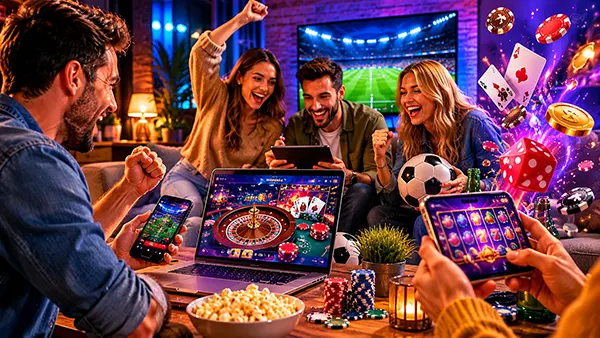
Why Some People Perceive Gambling as a Social Leisure Activity
Gambling is often discussed in terms of risk, entertainment, and financial outcomes, yet for many people it also serves a social function. Whether in a land-based casino, a betting shop, a poker club, or an online community, gambling can bring individuals together through shared experiences and common interests. The social aspect of gambling has become increasingly visible in recent years as technological developments, live dealer games, and interactive features have encouraged greater communication between players. Understanding why some people view gambling as a social leisure activity helps explain its continuing popularity among different age groups and social backgrounds.
The Role of Social Interaction in Gambling Activities
Many gambling environments are designed to encourage communication and interaction. Traditional casinos provide opportunities for players to sit together at poker tables, roulette wheels, or blackjack games, where conversation naturally develops while games are taking place. These interactions can create a sense of belonging and help participants feel connected to others with similar interests.
For some individuals, gambling outings are comparable to other forms of group entertainment, such as attending sporting events, dining out, or visiting social clubs. Friends may organise trips to casinos, discuss betting strategies, or watch sporting events together while placing wagers. In such situations, the gambling activity itself becomes only one part of a broader social experience.
The social dimension can also reduce feelings of isolation. Retired individuals, tourists, and people seeking recreational activities may appreciate the opportunity to spend time in settings where interaction occurs naturally. The ability to meet new people and engage in conversations contributes to the perception of gambling as a form of leisure rather than merely a financial activity.
Shared Experiences and Group Participation
People often enjoy activities more when they can share them with others. Celebrating a win, discussing a close result, or analysing a sporting event creates common experiences that strengthen social bonds. These shared moments can become memorable regardless of the actual financial outcome.
Group participation is particularly common in sports betting. Friends frequently gather to watch football matches, horse races, tennis tournaments, or other competitions while discussing predictions and outcomes. The anticipation before an event and the conversations afterwards can be as enjoyable as the event itself.
Research into leisure behaviour has consistently shown that shared activities often increase enjoyment and engagement. Gambling can fit this pattern when it is approached responsibly and viewed as part of a wider social occasion rather than as an isolated pursuit focused solely on winning money.
How Technology Has Expanded Social Gambling Experiences
Digital innovation has transformed the way people interact while gambling. Online casinos and betting services now include features such as live chat, multiplayer tournaments, community leaderboards, and live dealer games that replicate many aspects of traditional social environments. These tools allow participants to communicate even when they are located in different countries.
Live dealer games have become particularly influential in shaping social perceptions of online gambling. Real dealers interact with players through video streams, answer questions, and create a more engaging atmosphere than automated games. As a result, many users report feeling more connected to the experience and to other participants.
Social media has also contributed to the growth of gambling communities. Players exchange opinions, discuss strategies, share news about sporting events, and participate in conversations related to their favourite games. These interactions often continue outside gambling sessions, creating long-term communities based on shared interests.
Online Communities and Digital Communication
Dedicated forums, discussion groups, and social media channels have enabled gambling enthusiasts to communicate more easily than ever before. People can exchange experiences, compare observations, and learn from one another without needing to meet in person.
The rise of streaming services has introduced another social element. Viewers can watch professional poker events, sports analysis programmes, or casino-related content while interacting through live chat functions. These discussions create a sense of participation even for those who are not actively gambling at that moment.
Digital communication has effectively expanded the social reach of gambling beyond physical venues. Many participants become part of ongoing communities where relationships are built around common interests, entertainment preferences, and regular interaction.

Psychological Factors Behind Social Gambling Behaviour
Humans are naturally social beings, and many leisure activities satisfy the need for connection and shared experiences. Gambling can appeal to these motivations when it is viewed as an opportunity to spend time with others, engage in conversation, and participate in group activities.
Another important factor is the excitement generated by uncertainty. Discussing predictions, outcomes, and game developments with friends can create a collective emotional experience. Anticipation and suspense often become more enjoyable when shared among a group rather than experienced alone.
Cultural traditions can also influence perceptions of gambling as a social activity. In some regions, betting on sporting events, participating in lotteries, or attending gaming venues has long been associated with social gatherings and community interaction. These traditions contribute to positive social associations that persist across generations.
Balancing Entertainment and Responsibility
While social benefits may exist, responsible gambling remains essential. Viewing gambling primarily as a form of entertainment rather than a source of income helps maintain healthy expectations and reduces the likelihood of problematic behaviour.
Many gambling operators now provide responsible gambling tools, including deposit limits, session reminders, self-exclusion options, and educational resources. These measures support individuals who wish to keep gambling within appropriate recreational boundaries while still enjoying its social aspects.
Ultimately, some people perceive gambling as a social leisure activity because it combines entertainment, interaction, shared experiences, and community participation. When approached responsibly, it can serve as one of many recreational activities that allow individuals to connect with others and enjoy time spent together.